" "

Holstein Maple Fest 2011 – JJ McLellan Proud Supporter

JJ McLellan & Son is a proud supporter of the Holstein Maple Fest. I attended with my family on Saturday and had a wonderful time eating pancakes, checking out how syrup is made, the kids rode some pony’s, walked through the trails of the bush and came home with some fresh kettle corn!

The Maple Fest information can be found at http://www.holsteinmaplefest.com/

Plumbing – Hot Water Heater || Mount Forest Plumber

Have you noticed your showers aren’t lasting as long or by the end of the night and the kids are all bathed and in bed… you go to enjoy a nice warm and relaxing shower to find that there is no hot water!

Do you know how old your hot water heater is ? Or when the last time it was serviced?
A properly maintained and serviced Hot Water Heater will provide you with much more available hot water than a poorly maintained and not-serviced Hot Water Heater.
One way you as a home owner can save money is by properly maintaining your hot water heater… and another is renting your hot water heater. By renting your hot water heater you simply pay a low monthly rental fee which covers any repairs which may have to be done to the hot water heater – reducing your out of pocket expenses!
Another way to save is with a Natural Gas Tankless Hot Water Heater!
Give us a call or drop us an email and we can discuss your Hot Water Needs and provide a FREE Estimate!
Some great information provided by Union Gas at http://www.uniongas.com/residential/naturalgasproducts/waterheater/

Natural Gas Water Heaters – Product Overview

Natural Gas Water HeatersNatural gas water heaters offer two distinct choices in style (storage tank and tankless) and three choices for venting (conventional, direct vent, power vent). Additionally, you may be able to combine your water heating with home heating.

Storage Tank Water Heaters
A storage tank water heater is the most common type of water heater in Canada. It consists of a gas burner and a steel cylinder storage tank with capacities ranging from 30 to 100 gallons (113 to 378 Litres).

How storage tank water heaters work:

Cold water is drawn into the bottom of the tank where it is quickly heated by a gas burner. Hot water rises to the top of the tank. As the hot water is used, it is replaced at the bottom with cold water.

The tank thermostat controls the water temperature in the tank both when it is leaving the tank to your taps and when it is on “stand by”, waiting in the tank to be used. The more efficient a water heater is the less heat is lost when the unit is on “stand by”.

Tankless Water Heater (also called On-Demand or Instantaneous Water Heaters)
A tankless water heater has no tank and stores no hot water. When hot water is needed, the water is heated on demand. When the hot water tap is turned on it triggers a flow switch that activates the burner which heats the cold water entering the tankless water heater. The water is rapidly heated to the desired temperature. This continues for as long as the hot water tap remains in the ‘on’ position. When the tap is turned ‘off’ the system shuts down resulting in substantial energy savings over units that have hot water stored in the tank on ‘stand-by’.

A tankless water heater can save space and offer flexibility being able to be installed close to the point of use.

Combination Water and Space Heating Systems
While many people have one appliance for space heating and another for water heating, you can have one natural gas appliance that heats both your water and provides heat to your home. This is called a combination system. These systems have one heat source that is shared between conventional pieces of equipment such as a tank water heater and an air handler to accomplish dual heating purposes.

Water Heating Venting 101

A natural gas water heater requires air for combustion and igniting. The air required can either come from outside or from the home itself. There are three types of venting for natural gas water heaters, each offering benefits depending on your installation limitations and requirements:

Direct Vent
A direct vent does not require a chimney, but vents through an outside wall and also brings air for combustion in from the outside. Some types of direct vent water heaters must be located close to an outside wall, while others may be located further away. Replacing

This style of venting is most often convenient when:

  • Replacing an electric water heater and a chimney is not available

  • You do not have an electrical source close to the water heater to power the vent

FACT – Neither a direct vented nor a conventional vent water heater requires electricity. If there is a power outage you will still have hot water.


Power Vent

A power vent water heater does not need a chimney, but uses an electrically powered fan to move combustion products outside.

This style of venting is used when:

  • Replacing an electric water heater and you do not have ready access to a chimney

  • You have access to a dedicated electrical receptacle within six feet of the unit

Conventional Vent
A conventional vent is required on most standard natural gas water heaters. Conventional vents can be either type B, double-wall metal vents or a tile-lined brick chimney. The conventional vent can be shared with most standard mid-efficiency furnaces or boilers. This type of vent draws the air it needs from inside your home. In airtight homes it is important that there is an adequate air supply from outside.

Nasties You’re Breathing In – Lennox | Comfort Matters Spring 2011

Lennox Comfort Matters Spring 2011

Nasties you’re breathing (and what to do about them)

1. Mold spores, which can be bad for both your health and your home furnishings. Mold thrives where there is too much moisture and natural fibers to feed the spores. To avoid the musty odors, window condensation and wood warping that can result from mold growth, see our online guide. Pairing a dehumidification system and air cleaner provides the best results for mold control.

2. Pet dander, which can stay airborne for hours. Use a brush to catch pets’ loose fur and bathe animals frequently. Air cleaners can also trap pet dander.

3. Unpleasant odors that can linger. Run an exhaust fan in the kitchen or bath to reduce excess humidity and odors, but don’t forget to turn it off afterwards.

4. Dust, and the irritating mites that live in it. Use a damp cloth to pick up dust instead of simply stirring up particles. Wash sheets at least once a week in hot water. Change your furnace and air conditioning filter once a month to control dust.

5. Ozone, ironically from something you use to clear the air. Many electronic particle air cleaners can actually produce ground-level ozone, a manmade pollutant that can aggravate asthma or bronchitis. Rest assured that Lennox Healthy Climate® air systems DO NOT produce harmful ozone.

6. Bacteria, some of which can cause serious illnesses. Wash fresh fruits and vegetables thoroughly, and clean sink drains twice a week with an antibacterial solution. Limit unwanted moisture throughout your home.

7. Pollen, triggering asthma or hay fever symptoms. Change clothes when you come home at the end of the day, and remove your shoes when you enter the house. A HEPA air filter can help clear the air effectively.

8. Mildew, a problem with high humidity. Keep your home’s humidity levels between 30% and 60% to control mildew; run your air conditioner to help reduce unwanted moisture, and install a dehumidification system.

9. Viruses, which spread under the right conditions. The same conditions that can cause mildew to spread – poor ventilation and too much moisture in the home – should also be addressed to control the viruses that can worsen sore throats, asthma and other respiratory problems.

10. Chemical vapors that lead to headaches, dizziness and respiratory problems. Be sure to air out dry-cleaned clothes before hanging them in your closet. Also avoid using scented deodorizers, and consider a PureAir™ air purification system that cleans your home’s air better than any other single system you can buy.

The above information is courtesy of Lennox
For more details on Lennox® products or to locate a Lennox Dealer near you, visit us online at JJ McLellan – Premier Lennox Dealer

HRV Air Exchanger Ventilation System || JJ McLellan Mount Forest

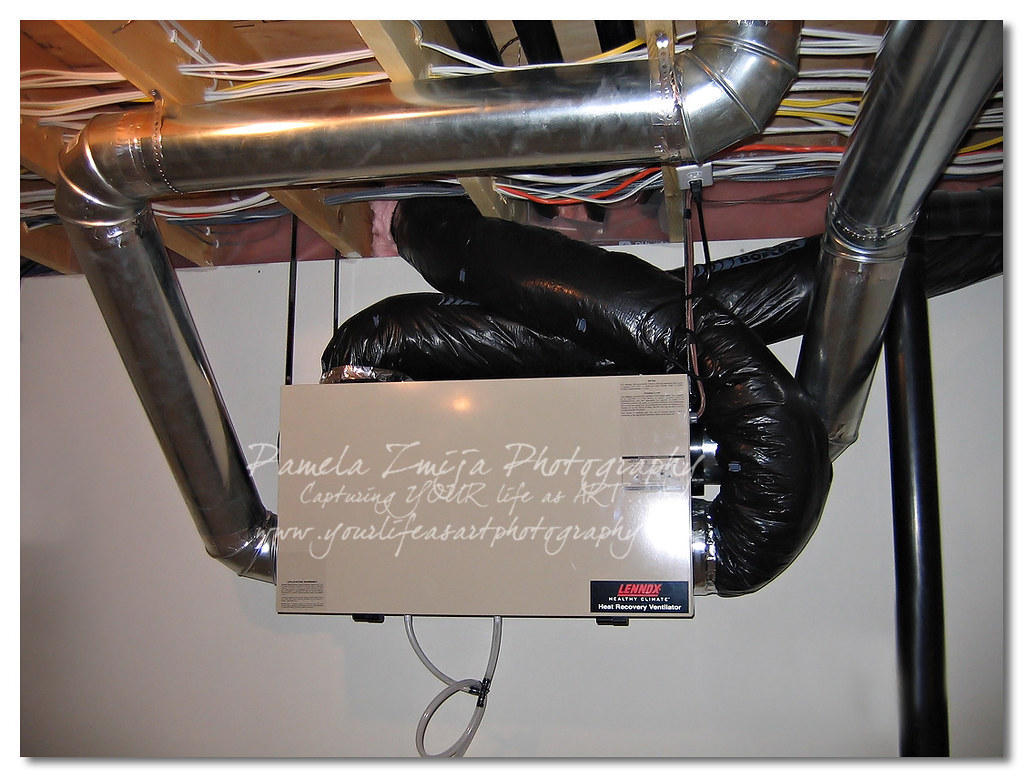
With all of these germs floating around infecting everyone … including my own son… What better topic to blog about than a HRV Ventilation System for your home! Such as the one in the photo above…

Ventilation Systems for the home or business are also referred to as an Air Exchanger or a HRV – Heat Recovery Ventilator. HRV stands for Heat Recovery Ventilator. Essentially what this appliance does is “exchanges” air within your home and outside with a continuous supply of fresh air from outside while removing stale air from the home.

The air exchanger can help remove more than just stale air, within the air is fumes from various products within your homes including new products or cleaning supplies, pet dander, pet odour and odours from the bathroom & kitchen. Also for anyone with any type allergies or asthma this can help them breathe cleaner and easier in the home.

Check out the links on our products page on our website located at JJ McLellan Products which will guide you to a few of our suppliers – just click on their logo and you can find out more information on their product. Give us a call or drop us an email for a FREE in home quote.

How to Conserve Hot Water || Mount Forest Plumber

This is some great information I found on saveonenergy.ca to help you not only save hot water but save money by saving hot water!

https://saveonenergy.ca/Consumer/Efficiency-Tips—Tools.aspx

General Plumbing Tips

•Save 15% of your home’s hot water use by taking quick showers instead of baths.
•Install low-flow shower heads.
•Turn your taps all the way off and replace worn out washers.
•Attach an aerator to the end of a faucet to reduce the flow rate by about half.
•Do as much household cleaning as possible with cold water rather than hot.
•Only run full loads in the dishwasher. Use the air dry (or energy saver) option if available. Heat drying is a high energy user.
•Rinse dishes in a tub of clean water instead of under hot running water.
•Fix any leaky taps. One constant drip can waste up to 182 litre-sized bottles of water per week. If it’s a hot water tap that’s leaking, you’re sending your energy dollars down the drain.

Faucets

•Repair leaky taps, which can waste 182 litre-sized bottles of water per week.
•Ensure that taps are turned off completely.
•Replace worn-out washers.

Hot Water Heaters
After home heating, water heaters use the most energy in the home. Take advantage of the small things you can do to maximize your savings.

•Fix any leaky taps. One constant drip can waste up to 182 litre-sized bottles per week. If it’s a hot water faucet that’s leaking, you’re sending your energy dollars down the drain.
•To save water and energy, install aerators on your kitchen faucets.
•Wrap your electric water heater with a blanket made for that purpose to help reduce heat loss.
•Insulate your hot water pipes.

Pipes

•Starting at your hot water tank, install pipe insulation around the first metre of the cold water pipe coming into the tank and the first two metres of the hot water copper pipes.
•If you have a gas-heated tank, start the pipe wrap 15cm away from exhaust vents at the top of the water heater.
•Never insulate plastic pipes.

Showerheads

•Install a low-flow showerhead to reduce the flow of water 40 to 60%.

Unscrupulous Water Testers || Public Service Annoucement

Information from the FM 102 Website Local News

Thursday, March 17, 2011 1:10 pm
Southgate is concerned that unscrupulous water testers are going door-to-door offering health-based testing. Southgate CAO Dave Milliner says it is very important that the public is aware that these sorts of businesses sometimes use trickery to convince residents their drinking water is unsafe. The Ministry of the Environment says door-to-door water tests do not tell if water is safe to drink. More information is available from local municipalities or health units.

Being Energy Efficient || Mount Forest Plumbing & Heating

Becoming more energy efficient is more than just changing a few light bulbs and caulking your windows. Being energy efficient is becoming a way of life and holds much more value than just energy savings on your monthly utility bill.

saveONenergy.ca recommends having the following:
  • lighting control products
  • energy star qualified light bulbs
  • power bars with integrated timers or auto shut off’s – I just may have to check this one out!
  • energy star qualified light fixtures
  • energy star qualified ceiling fans
  • programmable thermostats – especially for electric baseboard heaters
  • weatherstripping
  • heavy duty outdoor timers
  • outdoor umbrella stands or clotheslines
  • insulation blankets for electric water heaters
  • pipe wrap for hot water pipes
Now… taking all of that into consideration… think of where and what they are all related to and when you use them most! Some of our suggestions are:
  • When you seal up any leaks with weather stripping this can save energy on your heating and less wear and tear on your furnace.
  • When using your clothesline or alternative to dry your clothing have your gas dryer serviced – you would be amazed at the amount of lint build up internally which could possibly cause a fire and require more energy.
  • You can save even more energy with your hot water heater by having it serviced regularly! Dirt, Dust and Lime build up (internally) can occur over time gradually lessening your hot water available through your tank.
  • With spring coming your furnace will soon be getting a well deserved break from the heating season – however do not forget about it until next heating season, ensure you call to have it cleaned and serviced so you are ready and running more efficient for when it is time to fire up the furnace again!
  • While calling to book your cleaning and servicing for your furnace ask us for the number of our local Duct Cleaner for the heating and return air ducts in your home. By removing any dust, dirt, dander etc from the ducts your reduce the amount of particles going through or getting stuck in the furnace filter.
  • While we are on the topic of your furnace filter now that Spring is fast approaching us – and hopefully the warmer temps are on the way as well – change your furnace filter!
  • Also do not forget to book a cleaning and servicing for your gas fireplace!
Please remember to work on gas appliances the technician must be fully licensed – give us a call to book your servicing today! Not only will you save energy, this can extend the life of your equipment by being properly maintained and taken care of.
Now that heating season will soon be coming to an end – could it possibly be time to replace your 15+ year old system? Click HERE to View our current promotions! Or Contact us in our Showroom and we can go over your own requirements, budget, current system and available options!

Winter + Heating… Its not over yet! || Mount Forest

Well Good Morning Mother Nature!

Just when we all thought winter heating season might be coming to an end and we would be blessed with some nice spring weather – WRONG! Horribly wrong 😉
So some Warm Friday Facts…
With all this blowing snow please make sure your furnace vents are clear! If they become clogged with snow this can cause your furnace to fail and leave you with a very cold house. One thing we will ask our customers is if they have checked the vent outside – unfortunately for seniors this can be difficult, so if you have a loved one living on their own please check on them to ensure their heating system is ok!
And…
From Lennox

11 minutes to a better year

It’s late December and the clock is ticking away the last of 2010. Fortunately, you only need a few minutes to make 2011 easier – on your health, your home and your bank account.

In just 11 minutes, you can:

1. Set your thermostat as low as is comfortable to save energy. Every degree you raise the thermostat setting in winter can increase your heating bill three percent. So slip on a sweater and socks and set the indoor temperature two or three degrees lower.

2. Mark your calendar to change your HVAC filter regularly. Dirty filters cause your furnaceto work harder, and can be harder on your allergies, too. Changing your filter once a month – at least during summer and winter, once every three months during the shoulder seasons – is better for your health and your HVAC system.

3. Install rubber gaskets behind switch plates on exterior walls. Available from home-improvement stores, the gaskets help stop cold air from entering through electrical outlets.

4. Change a light bulb. Better yet, change out five standard incandescent bulbs for CFLs in your most frequently used fixtures. If every home did this, it would prevent the production of one trillion pounds of greenhouse gases.

5. Close the doors on your fireplace when it’s not in use. Fireplaces look and feel cozy, but they are essentially an open door to the elements.

6. Check your home’s air filtration systems. Unless you own an ozone-free filtration system, it may be doing your home more harm than good.

7. Take just a moment to slip off your shoes as soon as you walk in the front door to helpreduce dust and other contaminants swirling in your home. Setting out a basket with house slippers near the door encourages family and guests to do the same.

8. Replace kitchen sponges weekly. Used sponges provide the moist environment bacteria need to breed. As an alternative soak sponges in bleach 15 minutes to help kill the 100,000 bacteria inhabiting every square inch.

9. Unplug battery chargers or power adapters when they’re not in use, and use a power strip as a single disconnect point. Electronics still draw a small amount of electricity even when they’re turned off, and a power strip allows you to completely disconnect the power supply when units aren’t in use.

10. Walk around your home to be sure furniture and draperies aren’t blocking air registers. No matter how effective your heating and cooling systems are, they can’t keep you comfortable if the warmed or cooled air is blocked by sofas or curtains.

11. Schedule annual maintenance on your HVAC equipment to avoid wasting energy. Locate a technician near your home by downloading the Lennox app for your iPhone™ or Android mobile device or by using the Lennox locator online.